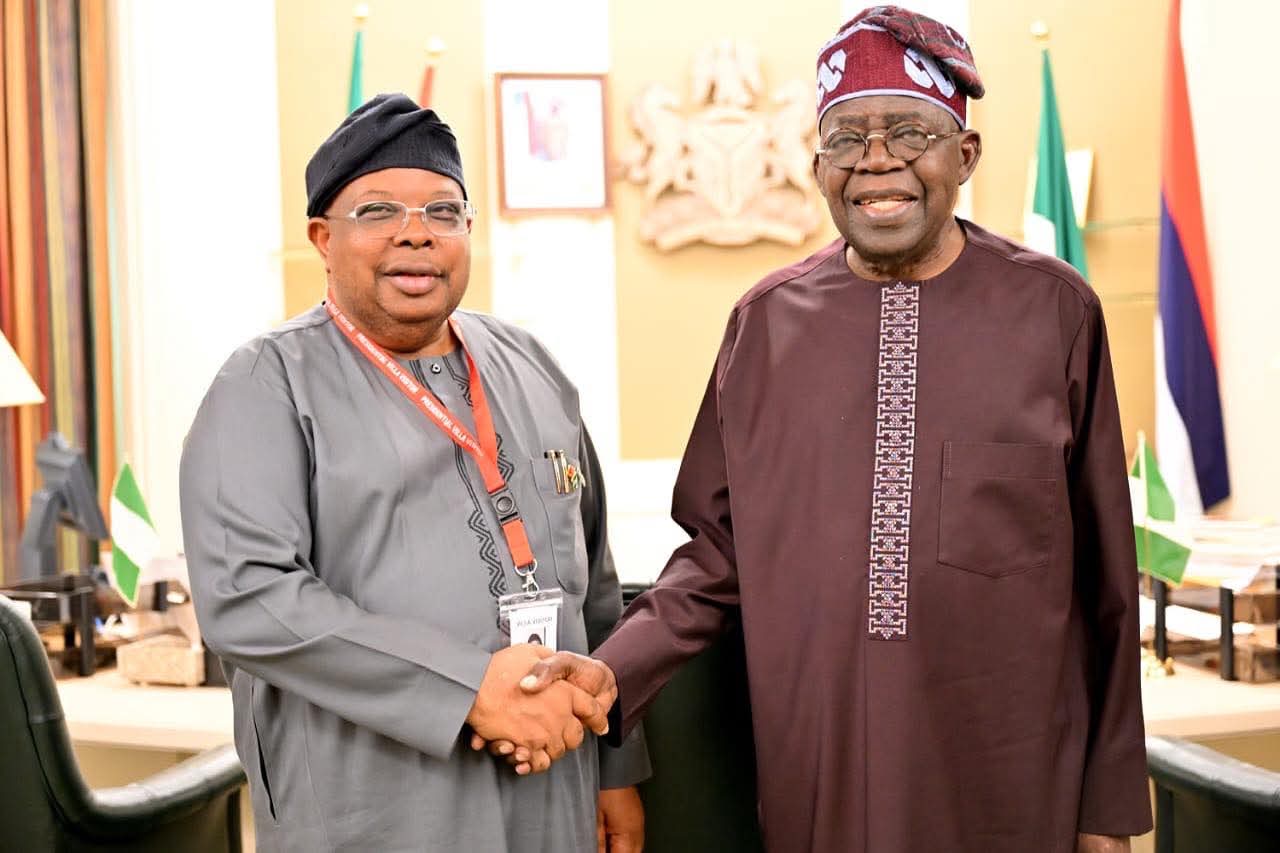
The nomination of Joseph Olasunkanmi Tegbe as Minister of Power by President Bola Ahmed Tinubu has drawn widespread commendation from stakeholders across Nigeria’s business and policy landscape, with many describing the move as a strategic step toward revitalizing the country’s power sector.

Tegbe, who currently serves as Director-General of the Nigeria–China Strategic Partnership (NCSP) and Chairman of the National Tax Policy Implementation Committee (NTPIC), is widely regarded as a results-driven technocrat with a strong blend of private and public sector experience.
Industry leaders note that Nigeria’s power sector, long challenged by supply deficits, grid instability, and structural inefficiencies, requires coordinated, execution-focused leadership capable of aligning policy with measurable outcomes.
Dr. Jonathan Achi, an industrialist and key player in the energy sector, expressed optimism about the nomination, describing Tegbe as “a pragmatic reformer with a clear understanding of how to drive results.” He pointed to Tegbe’s leadership at NCSP, where he advanced bilateral cooperation and facilitated significant investment commitments across critical sectors.
Under his stewardship, the NCSP recorded major milestones, including multi-billion-dollar investment engagements spanning agriculture, mining, steel, and energy. Notably, efforts to revitalize Nigeria’s steel value chain and expand industrial capacity have been linked to broader goals of job creation and economic diversification.
Stakeholders also reference Tegbe’s role in advancing large-scale initiatives such as the National Integrated Poultry Project, as well as his engagement with global technology firm Huawei Technologies to support Nigeria’s digital transformation agenda.
Musa Abdullahi, a business leader, noted that Tegbe’s involvement in landmark economic projects demonstrates “a rare ability to connect vision with delivery,” adding that his experience would be valuable in repositioning the power sector for sustainable growth.
Beyond infrastructure and industrial policy, Tegbe’s leadership of the NTPIC has also drawn attention, particularly in advancing implementation of Nigeria’s evolving tax framework and strengthening stakeholder confidence through structured engagement.
Analysts argue that the complexities of Nigeria’s electricity market, spanning regulation, generation, transmission, and distribution, require leadership capable of coordinating across institutions such as the Nigerian Electricity Regulatory Commission and the Nigerian Bulk Electricity Trading Company, while unlocking private capital and restoring market discipline.