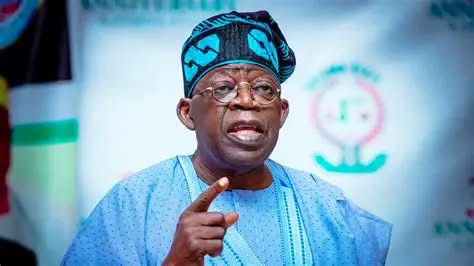
President Bola Tinubu on Friday said national security remained the fundamental bedrock required to achieve Nigeria’s economic ambitions and lasting prosperity, insisting that the safety and protection of lives constituted the baseline for meaningful business expansion in the country.
The President, represented by Vice President Kashim Shettima, made the remarks at the graduation ceremony for participants of the National Defence College Course 34 in Abuja, where he maintained that strengthening the Armed Forces and neutralising criminal elements, bandits and terrorists remained central to the government’s focus.
The Senior Special Assistant to the President on Media and Communications in the Office of the Vice President, Stanley Nkwocha, disclosed this in a statement he signed on Friday, titled, ‘President Tinubu: Securing Lives Of Nigerians Non-Negotiable, Key To Our Economic Ambitions.’
Tinubu said, “Our economic ambitions accompany the duty to secure our people.
“The Armed Forces and security agencies continue to confront terrorism, banditry, kidnapping, piracy and organised criminality with courage and professionalism.
“Government will provide equipment, training, resources and institutional support for their constitutional duties.”
He linked national stability directly to economic opportunity, saying, “Peace creates room for enterprise, and enterprise enlarges the citizen’s stake in peace. When communities recover security, opportunity must follow, because stability grows where people can work, trade, learn and hope.”
Aligning with the theme of former President Goodluck Jonathan’s recent graduation lecture at the college, Tinubu said the continent’s long-term security would increasingly hinge on economic transformation.
“Africa’s security will increasingly depend on productive economies, regional value chains, innovation, and industries capable of employing its young population,” he said.
He argued that industrialisation, deepened through the African Continental Free Trade Area, must drive inclusive growth across the continent.
“Industrialisation must drive inclusive growth, reduce structural vulnerability and enlarge continental bargaining power,” the President said, restating Nigeria’s commitment to a peaceful, prosperous and integrated Africa.
On domestic reforms, Tinubu outlined ongoing efforts under the Renewed Hope Agenda to build a more productive and diversified economy.
“We are improving conditions for enterprise, encouraging private investment, promoting local value addition and expanding roads, railways, ports, energy and digital connectivity.
“These investments reduce costs, connect markets and reinforce national integration. We are strengthening capacity in agriculture, solid minerals, manufacturing, technology and defence industry.
“Sovereignty acquires substance when a nation can absorb shocks, meet essential needs and defend its interests,” he said.
Addressing the graduands, Tinubu described the course as reflective of the breadth required by modern statecraft, drawing participants from the Armed Forces, Police, public institutions and friendly nations.
He urged them to ensure that the networks they had built during the programme deepened cooperation, understanding, peace and development across Africa and beyond. He also charged them to carry forward the college’s values of excellence, courage, patriotism and integrity.
He commended the Commandant, faculty and staff of the college for sustaining Nigeria’s foremost institution for strategic education and for their devotion to education and policy-oriented research.
Earlier, the Commandant of the National Defence College, Rear Admiral Abdullahi Ahmed, said the President’s presence at the ceremony, represented by the Vice President, reflected the administration’s commitment to strategic leadership development and national security.
He said participants had, over the preceding 47 weeks, undergone an intensive training programme comprising research, field tours and seminar presentations focused on contemporary security and developmental challenges, as well as high-level defence management.
According to him, the participants were expected to translate the knowledge gained into tangible solutions for various sectors of the Nigerian economy.
The high point of the ceremony was the presentation of certificates to 103 participants, comprising 33 from the Nigerian Army, 20 from the Nigerian Navy, nine from the Nigerian Air Force, four from the Police, 17 from ministries, departments and agencies, and 20 international participants.
Awards were also presented to deserving participants.
