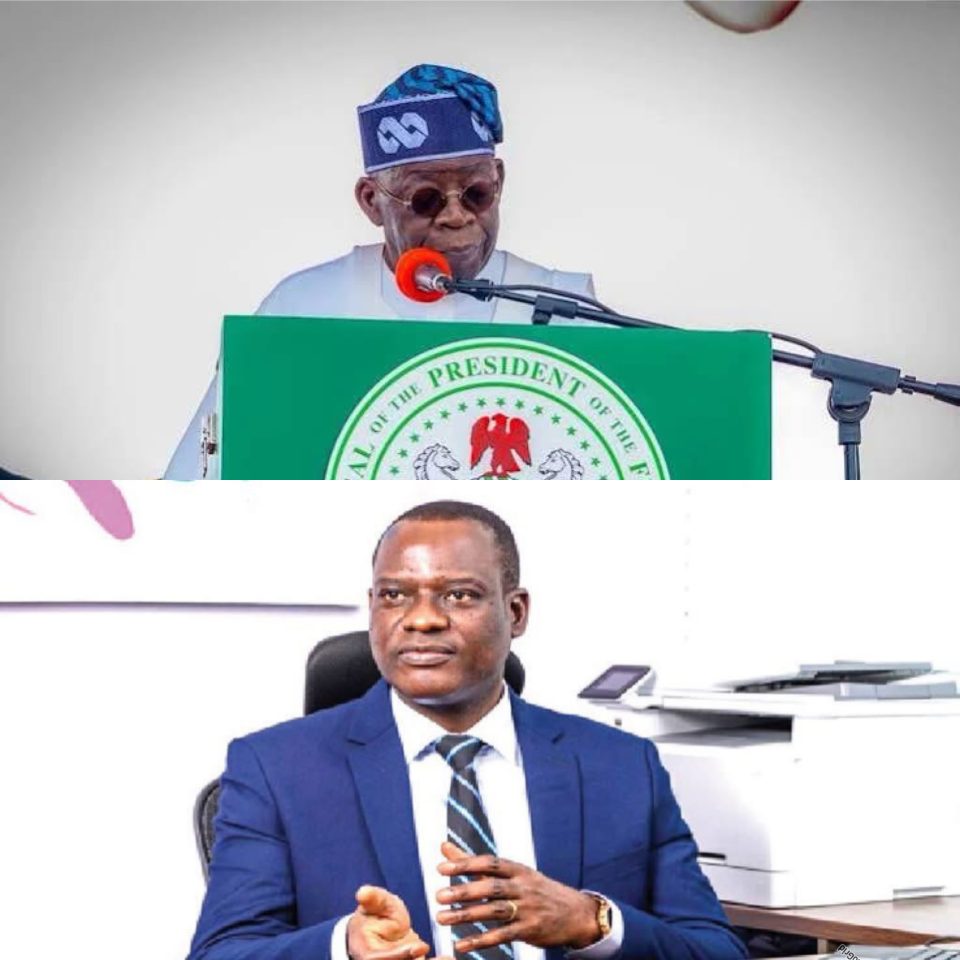
The Federal Government has said the petrol discount introduced by the Nigerian National Petroleum Company Limited’s retail arm is not a return of fuel subsidy, insisting that no public funds are being used to reduce prices at its filling stations.
The government said the discount was funded by NNPC Retail Limited’s decision to reduce its retail profit margin, rather than through payments from the federal budget or the Federation Account.
The Minister of Finance and Coordinating Minister of the Economy, Taiwo Oyedele, stated this in a release issued by the Federal Ministry of Finance in Abuja on Friday, titled, “The NNPC Retail Discount Is Not a Subsidy: No Public Money Is Involved.”
The clarification followed an earlier announcement by the Presidency that NNPC Retail would forgo its retail profit margin on petrol and sell at cost as part of measures to cushion households against global oil-price shocks.
In a statement issued on Thursday and signed by the Special Adviser to the President on Information and Strategy, Bayo Onanuga, the Presidency said the arrangement, backed by President Bola Tinubu, was not a return of the petrol subsidy removed in 2023.
However, explaining the difference between a retail discount and a subsidy, Oyedele said, “Some commentators have described the discount as a return of fuel subsidy. That is not correct. Here, plainly, is what the discount is and what it is not.”
He added, “A margin discount means the retailer chooses to take a smaller margin, or no margin at all for a period, and passes the saving to the customer. The cost of the discount is borne by the retailer alone.”
According to the minister, a subsidy involves the government paying part of the price consumers would otherwise pay, using public revenue.
“A subsidy is different. It is when government pays part of the price the consumer would otherwise pay. That money comes from public revenue — funds that would otherwise go to salaries, schools, hospitals and infrastructure. That is the regime this administration ended in 2023, and it is not coming back,” he said.
Oyedele stated, “The discount is not funded by the federal budget or the Federation Account.”
He explained that NNPC Retail purchases petrol from the Dangote Refinery and other suppliers at market prices and on commercial terms before adding its retail margin. Under the discount arrangement, the company reduces that margin to lower the price paid by customers.
The minister also said selling crude oil below market prices could amount to a subsidy if the resulting shortfall were borne by public revenue.
NNPC Retail, a wholly owned subsidiary of NNPC Limited, was established more than 20 years ago as a petroleum marketing and retail company. Oyedele said its role included ensuring the availability and affordability of refined products nationwide.
“Its purpose, in other words, is to keep products available across the country and to moderate retail prices, not necessarily to maximise retail profit,” he said.
The minister argued that reducing the margin on each litre of petrol would not necessarily reduce NNPC Retail’s overall profits or the dividends paid to the Federation, as higher sales volumes and customer loyalty could offset the lower margin.
“A smaller margin or temporary zero margin on each litre can be more than offset by selling more litres over time. And a discount builds customer loyalty that lasts well beyond the discount period itself,” he said.
He added, “Together, these can raise NNPC Retail’s profits, and the dividends paid to the Federation: a win-win for consumers and for government.”
Addressing concerns that the discount could encourage petrol smuggling into neighbouring countries, Oyedele said the retail margin represented less than five per cent of the pump price.
“The retail margin on petrol is less than 5 percent of the pump price. A discount within that margin cannot meaningfully widen the gap between prices in Nigeria and in neighbouring countries, where petrol already costs 20 to 40 percent more,” he said.
He added, “It therefore creates no new incentive for smuggling, and no distortion of the kind that subsidy regimes produced in the past.”
The minister listed other government measures aimed at easing the impact of fuel costs, including expanding compressed natural gas deployment for transport, waiving taxes and duties on petrol, and removing illegal levies that increase transportation costs.
“Each is designed to bring relief without returning Nigeria to a subsidy regime that the country can no longer afford,” he said.
Summing up the government’s position, Oyedele said, “A subsidy spends public money to lower the price of fuel. The NNPC Retail discount lowers the price without spending any public money, and it can strengthen NNPC Retail’s business at the same time.”
