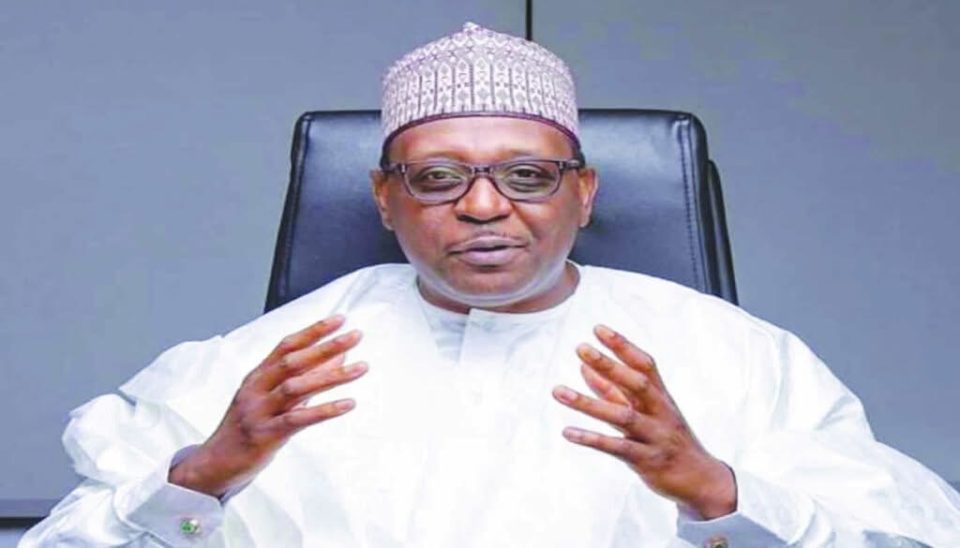
The Minister of Health and Social Welfare, Prof. Muhammad Pate, has said there is no immediate need to cancel political campaigns, conferences or other large public gatherings following Nigeria’s confirmation of an imported Ebola virus disease case.
Pate, however, warned that the government would review the situation and consider appropriate restrictions if the outbreak worsened, stressing that decisions would be based strictly on scientific evidence and public health considerations.
The minister spoke on Thursday in Abuja during a press briefing on the government’s response to the Ebola case, assuring Nigerians that the patient was receiving treatment and showing encouraging signs of recovery.
“Thankfully, that individual has been taken care of and, in fact, is recovering. Today, I spoke to the clinicians, and I understand that laboratory results are showing great improvement, and there is a possibility that she would recover from this,” he said.
He added that the government would not take anything for granted, noting that efforts were ongoing to prevent the infection from spreading to communities.
“We have to continue to pray and work hard to ensure that she survives it,” Pate said.
According to the minister, the patient was asymptomatic when she arrived in Nigeria but developed symptoms a few days later, prompting public health authorities to initiate contact tracing after the infection was confirmed.
He said contacts identified through the patient’s hospital attendance, domestic interactions and visit to a private clinic had been assessed and categorised according to their levels of exposure.
“The high-risk contacts have been quarantined fully in a facility. The others have been isolated, and we are ensuring that the isolation is enforced, consistent with public health expert guidelines,” he stated.
Pate said the Nigeria Centre for Disease Control and Prevention had activated the incident management system and was coordinating the day-to-day national response in collaboration with the Federal Capital Territory authorities.
He added that the Federal Government had briefed the Presidential Task Force, the Nigeria Governors’ Forum and the National Economic Council, while state governments had also been informed of the development.
The minister said the President had released additional resources to the NCDC to support the response, while the government was mobilising further domestic resources to strengthen preparedness and containment efforts.
He disclosed that the government was working with the World Health Organisation, the Africa Centres for Disease Control and Prevention and other technical partners to manage the situation.
Pate also said arrangements were being made to conduct further genomic sequencing of the virus to improve understanding of the strain detected.
He said Prof. Christian Happi, a renowned genomics expert based at Redeemer’s University, Ede, had been invited to complement the NCDC’s laboratory and surveillance work.
The minister explained that Nigeria had the technical capacity to detect and respond to the infection, noting that the case was diagnosed, confirmed and reported to the WHO within 24 hours of public health authorities being alerted.
“We are assuring Nigerians that the public health capacity is there. We are able to diagnose this from when the public health authorities were informed, within 24 hours, and we notified the WHO,” he said.
Pate urged Nigerians to remain vigilant and follow public health advice, including frequent handwashing and avoiding unnecessary contact with other people’s body fluids.
He said Ebola was not an airborne disease but was transmitted through contact with infected body fluids, urging people experiencing symptoms such as fever, headaches and muscle aches, particularly those with relevant travel histories, to isolate themselves and promptly notify public health authorities.
“We are assuring Nigerians that we can be able to deal with it. But to do that, we need the cooperation of Nigerians to follow expert advice,” he said.
The minister also urged people identified as contacts of the confirmed case to comply with quarantine and isolation requirements, warning that failure to do so could expose others to infection.
He said hospitals, including federal health facilities, had been directed to prepare isolation beds and strengthen infection prevention and control measures, particularly for frontline health workers.
Pate further called on private hospitals and practitioners to promptly notify public health authorities of suspected cases, recalling the importance of private facilities in the detection and management of infectious disease outbreaks.
On the possibility of restricting political activities and public events, the minister said the government would not take such decisions without evidence that they were necessary.
“At this moment, there is no indication that requires us to alter the course of large gatherings that have been planned,” he said.
“But if the situation changes, we’ll make a determination; we’ll consult broadly with the right experts and make that determination.”
He also cautioned political leaders against turning the outbreak into a partisan issue, describing public health as a unifying concern that transcended political, religious and ethnic differences.
“If there is one issue that will unite Nigerians, it is health, because health has no political party, has no citizenship, has no nationality, has no tribe, no religion. It is a great unifier,” he said.
Pate urged the media to rely on verified information from health authorities and avoid amplifying rumours and misinformation, warning that public distrust could undermine efforts to contain the infection.
Responding to concerns that some Nigerians doubted the existence of the outbreak, he said the case had tested positive on three occasions.
“The truth is, we do have a case. It has been tested three times, and those three times’ tests came back positive,” he said.
He called on Nigerians to trust qualified health professionals and official sources, warning that misinformation could discourage people from complying with public health measures.
“The alternative to trusting the experts is tragedy. It’s really tragedy,” the minister said.
He cited Nigeria’s past experience with resistance to polio vaccination as an example of how misinformation could undermine public health interventions and expose communities to preventable harm.
Pate added that the government was strengthening surveillance at the country’s points of entry, including measures to ensure thermal imaging equipment was functional and that traveller risk assessments complied with international health regulations.
He said the Federal Government would continue to provide regular updates as investigations progressed, adding that the NCDC would maintain its daily briefings while the ministry monitored the situation.
“We don’t want it to go beyond it, and there is no need to panic, but we have to be vigilant,” he said.
