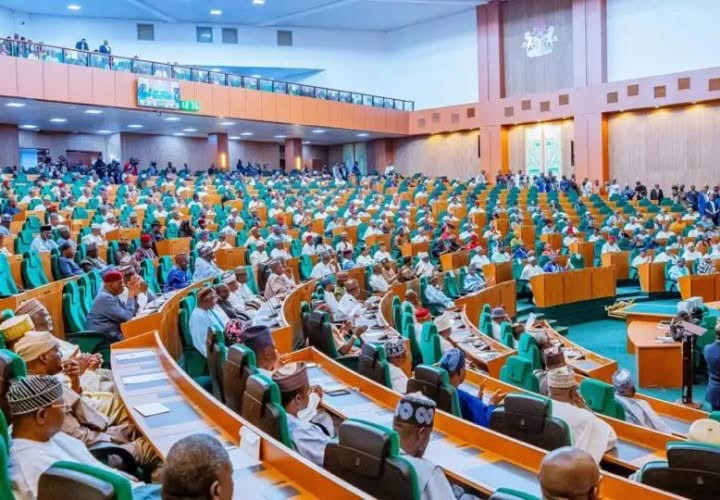
The House of Representatives has directed the Chairman of the Independent National Electoral Commission, Prof. Joash Amupitan, to appear before its Committee on Electoral Matters within seven legislative days to brief lawmakers on preparations for the 2027 general elections, particularly measures to prevent the disenfranchisement of voters in areas affected by insecurity.
The committee is expected to examine the commission’s readiness in continuous voter registration, Permanent Voter Card management, election logistics, deployment of the Bimodal Voter Accreditation System and the INEC Result Viewing Portal, personnel training, electoral security and funding.
It will also seek an assessment of lessons learnt from the recent governorship elections in Ekiti and Osun states.
The resolution followed the adoption of a motion sponsored by the Minority Whip, Mansur Soro, and the Deputy Minority Leader, Abdulsamad Dasuki, during Wednesday’s plenary.
The House said Amupitan should provide a detailed report on the commission’s preparations, including the progress of voter registration, PVC production and distribution, deployment of election technology, recruitment and training of electoral officials, and identification of areas facing operational and security challenges.
Lawmakers also want details of budgetary appropriations, funds released, outstanding releases and the implications of any funding gaps for the implementation of the election timetable.
The sponsors had initially sought the INEC chairman’s appearance before the entire House at plenary. However, Deputy Speaker Benjamin Kalu opposed that aspect of the motion, arguing that the assignment should be handled by the committee constitutionally responsible for overseeing the commission.
Kalu said the proposed appearance before the full House could undermine the authority of the Committee on Electoral Matters, adding that Amupitan had recently briefed the public on the commission’s preparations and the challenges confronting it.
“While I agree, such oversight should be carried out, I believe that the oversight should be by the committee of the House that has been given this responsibility to do so.
“Inviting the chairman of INEC to come and brief the House, when he just finished briefing the nation, is not ideal. Don’t we believe in our committees again? Our committees are there, charged with the responsibility. The chairman and members of this committee are well-educated and well-informed to carry out their decisions,” he said.
The Speaker Tajudeen Abbas clarified that the House was not opposed to inviting the INEC chairman but insisted that the engagement should take place at committee level rather than during plenary.
“The committee should invite the chairman and should advertise the date of his appearance so that members who want to attend and ask questions can do so,” he said.
Presenting the motion, Soro cited Sections 76, 116, 132 and 178 of the 1999 Constitution, as amended, provisions of the Constitution’s Third Schedule and the Electoral Act 2026, which establish INEC’s responsibility for organising, undertaking and supervising elections.
He said the credibility, transparency and acceptability of the 2027 elections would depend largely on the commission’s preparedness in voter registration, voter education, logistics, technology deployment, personnel training, security coordination and funding.
According to him, the recent governorship elections in Ekiti and Osun provided useful lessons in election administration, logistics management, technology deployment, stakeholder engagement, security and voter participation.
The lawmaker also drew attention to operational difficulties reported at Continuous Voter Registration centres across the country, including inadequate registration equipment, insufficient personnel, network problems, prolonged waiting times and growing demand from citizens seeking to register or update their voter information.
“These operational difficulties particularly affect first-time voters, rural citizens, individuals with disabilities, students, and workers, limiting their access to registration and threatening the participation of eligible voters in the electoral process without timely interventions,” he said.
Soro warned that failure to address the challenges early could affect the timely procurement of election materials, deployment of technology, training of personnel, voter education and security planning.
He expressed concern that delays in resolving gaps in voter registration, logistics, technology and funding could undermine public confidence in the electoral process and jeopardise the peaceful conduct of the 2027 elections.
The lawmaker said the National Assembly had a constitutional responsibility to ensure that public institutions entrusted with critical national assignments were adequately prepared, properly funded and accountable.
While acknowledging INEC’s efforts to strengthen the electoral system, he called for sustained parliamentary engagement to ensure free, fair, credible, inclusive and peaceful elections.
Dasuki, in his contribution, said the motion was intended to address concerns about the ability of eligible voters in insecure areas to participate in the elections.
“This is the very first time we are going into an election with 11 months of security concerns,” he said.
He disclosed that members of the House had sponsored about 255 motions relating to insecurity, arguing that the situation raised questions about whether residents of some constituencies and polling units would be able to vote.
He maintained that INEC needed to explain how it intended to manage elections in areas where insecurity could prevent voters from accessing polling units or disrupt electoral operations.
The committee’s engagement with the INEC chairman is expected to provide lawmakers with an opportunity to scrutinise the commission’s preparations and identify areas requiring urgent intervention ahead of the 2027 general elections.
